UX Case Study
Benarit - AI Based Pricing System
An AI-based pricing system that analyzes project data and generates transparent, reviewable cost estimates for construction professionals.
Role
UX Designer - Signature-IT
Timeline
October - December 2025
Product
B2B SaaS
Target audience
Construction professionals
Project
Client project - Benarit
Overview
Designing the Pricing Experience
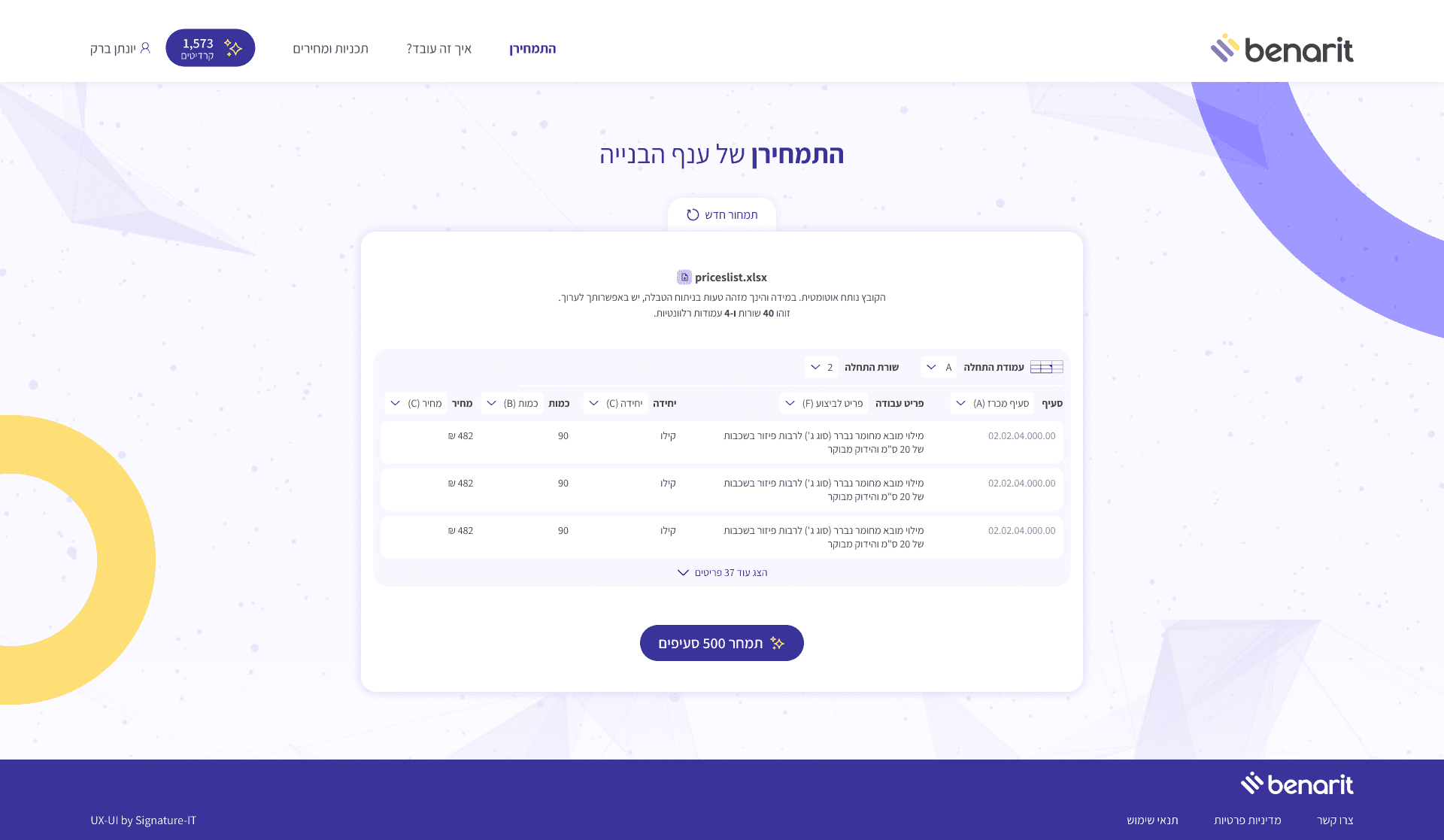
This case study presents the UX design of an AI based project pricing system developed from scratch for the construction industry. The platform enables professionals to upload Excel based project data, review how the system interprets their information, and receive a detailed pricing estimate. The core UX challenge was designing a transparent, trustworthy experience around AI-driven pricing, where data inconsistencies, financial impact, and user confidence all play a critical role. The solution focused on giving users visibility, control, and clarity at key decision points, especially before paid actions.
01.problem statement
Pricing Under Uncertainty
Accurately pricing construction projects is a complex and high risk process.
Project data is often inconsistent, incomplete, and structured differently from one project to another, requiring extensive manual work and professional judgment.
As a result, pricing is time consuming, difficult to validate, and prone to errors, while directly impacting critical financial decisions.
"A small miscalculation can mean a big loss."
02.UX Approach
Insights from Domain Knowledge
Due to project constraints, user research was conducted through close collaboration with the client rather than formal user interviews.
Insights were gathered via:
Ongoing conversations with domain experts.
The client’s deep familiarity with real world pricing workflows.
Analysis of actual project data used in day to day pricing.
This approach provided a realistic understanding of user needs, behaviors, and decision making contexts while aligning with project constraints.
“Pricing decisions are shaped by experience as much as by data.”
“Let me see how the system interpreted the data.”
03. System Flow
How the System Works
The system supports project pricing through a structured, multi step process. Users submit project data, which the system processes and interprets to generate pricing. Before any pricing action is finalized, users can review how their data was understood, validate key inputs, and make adjustments where necessary.
This flow reduces the risk of costly errors and supports informed decision making by balancing automation with user oversight.
04.Design Focus
Designing for Informed Commitment
Designing the pricing experience required careful consideration of where users need clarity, control, and reassurance throughout the flow. Given the financial implications of pricing decisions, certain moments in the experience carried more weight than others and demanded deliberate UX choices.
"Decisions carry weight
when money involved"
05.Key UX Decision
Pre Commitment Review Step
A key UX decision was introducing an intermediate review step before users initiate the pricing action, a point in the flow that involves a direct financial commitment.
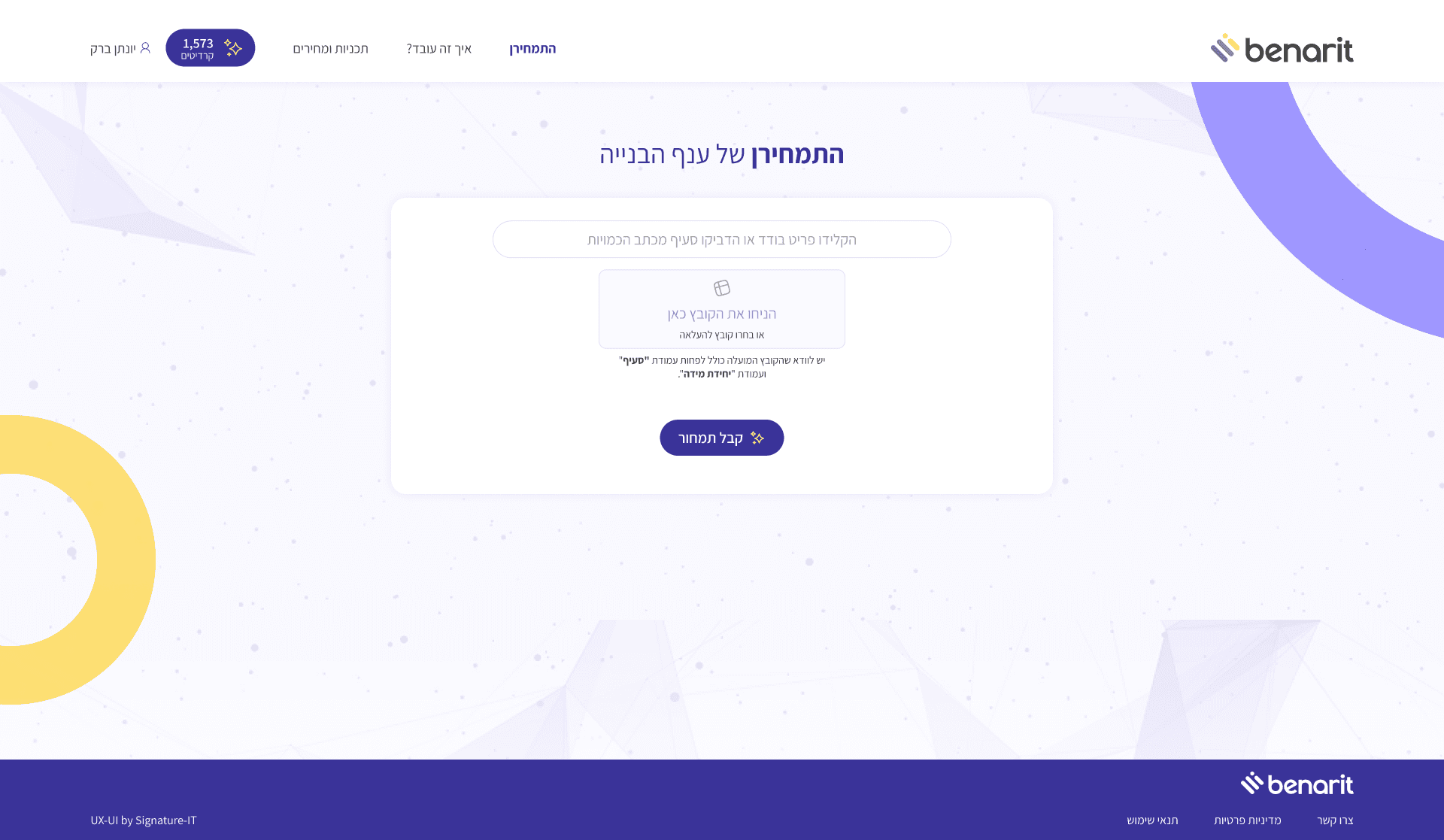
After uploading their project data, users can review how the system interpreted the information and make adjustments before proceeding. This step reduces the risk of errors, gives users control over the automated process, and builds trust by making system logic visible.
Placing transparency at the moment of commitment supports confident decision making and reinforces the system’s credibility.
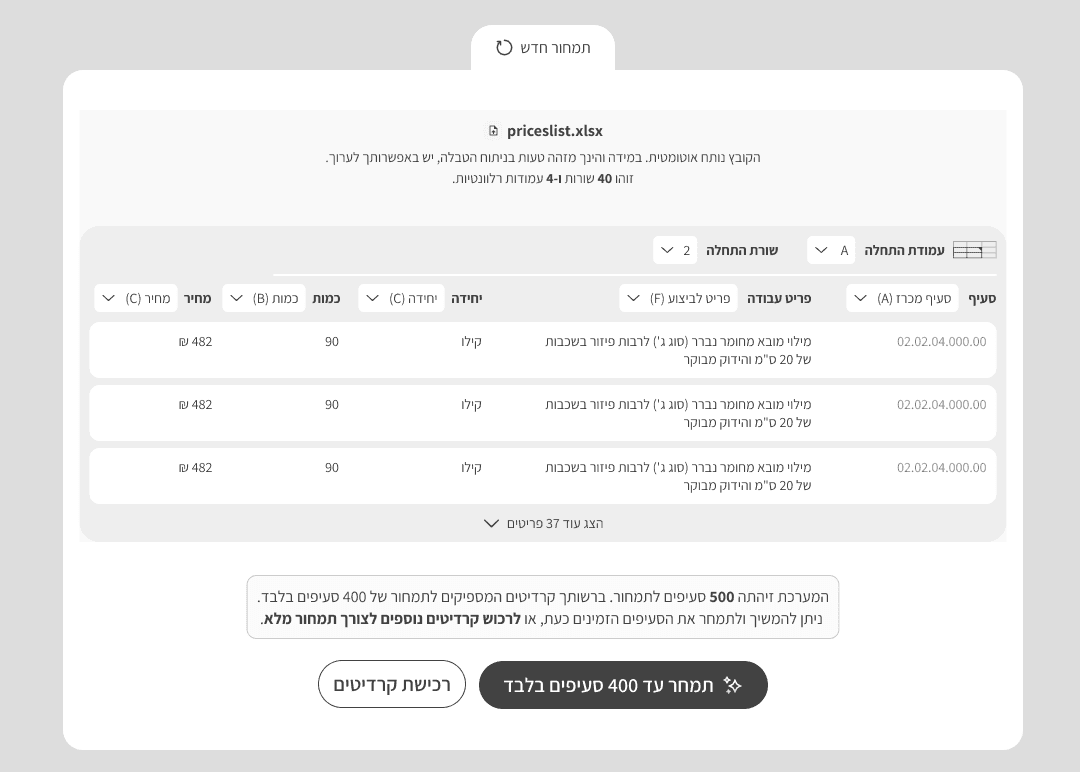
Adjust how data is interpreted
06.Information Structure
Information Design & Refinement
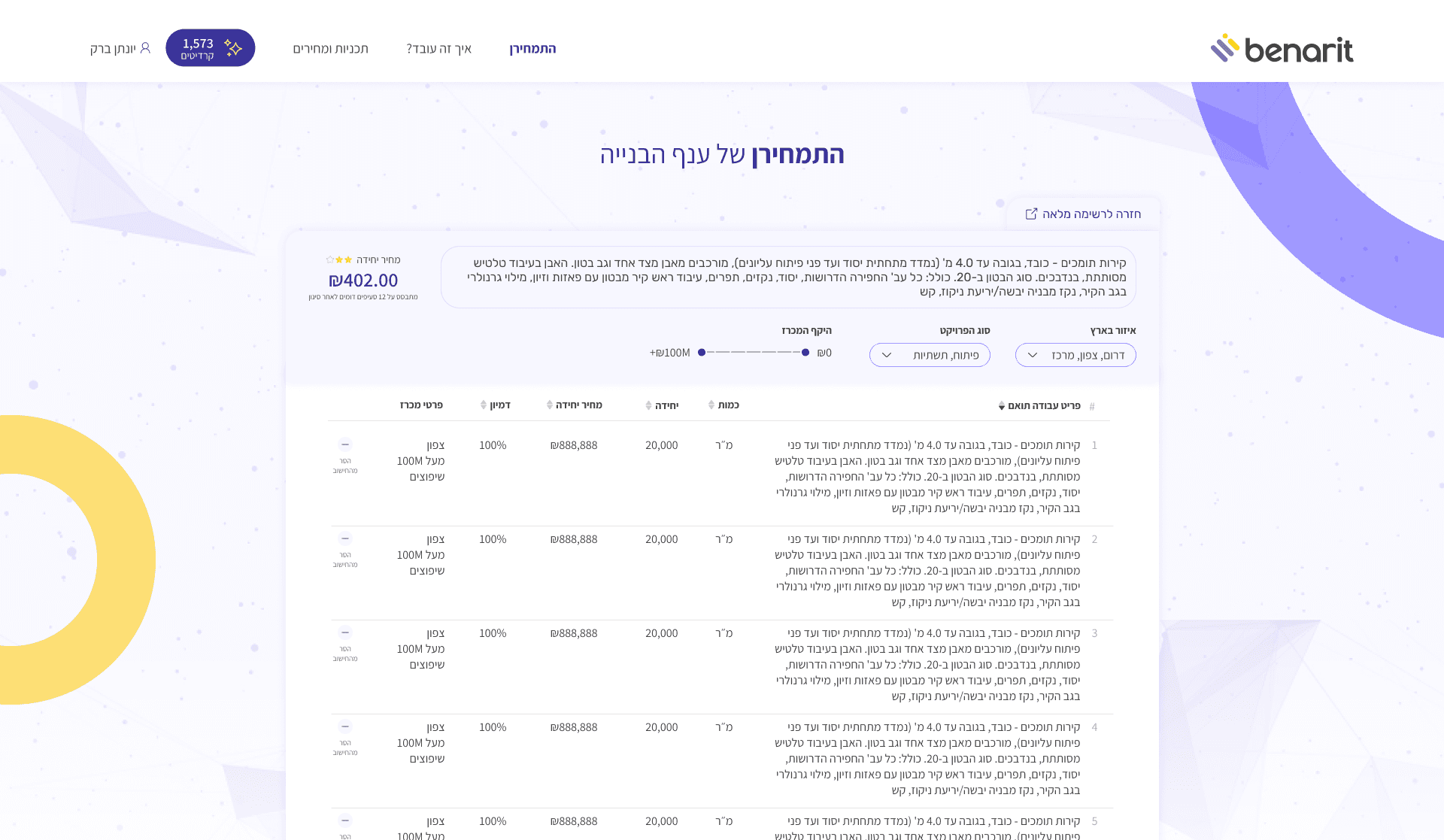
Another major focus was preventing cognitive overload in a data-heavy environment.
Information was carefully structured to maintain clarity without sacrificing necessary detail. This included simplifying data views, prioritizing essential information, and avoiding unnecessary technical language.
Decisions around hierarchy, layout, and content density were made collaboratively, with a consistent focus on usability and user confidence, especially at moments where users evaluate data and pricing-related inputs.
07.Decision Support
Building Trust Through Pricing Transparency
Beyond validating the data itself, a key UX challenge was building trust in the pricing outcome.
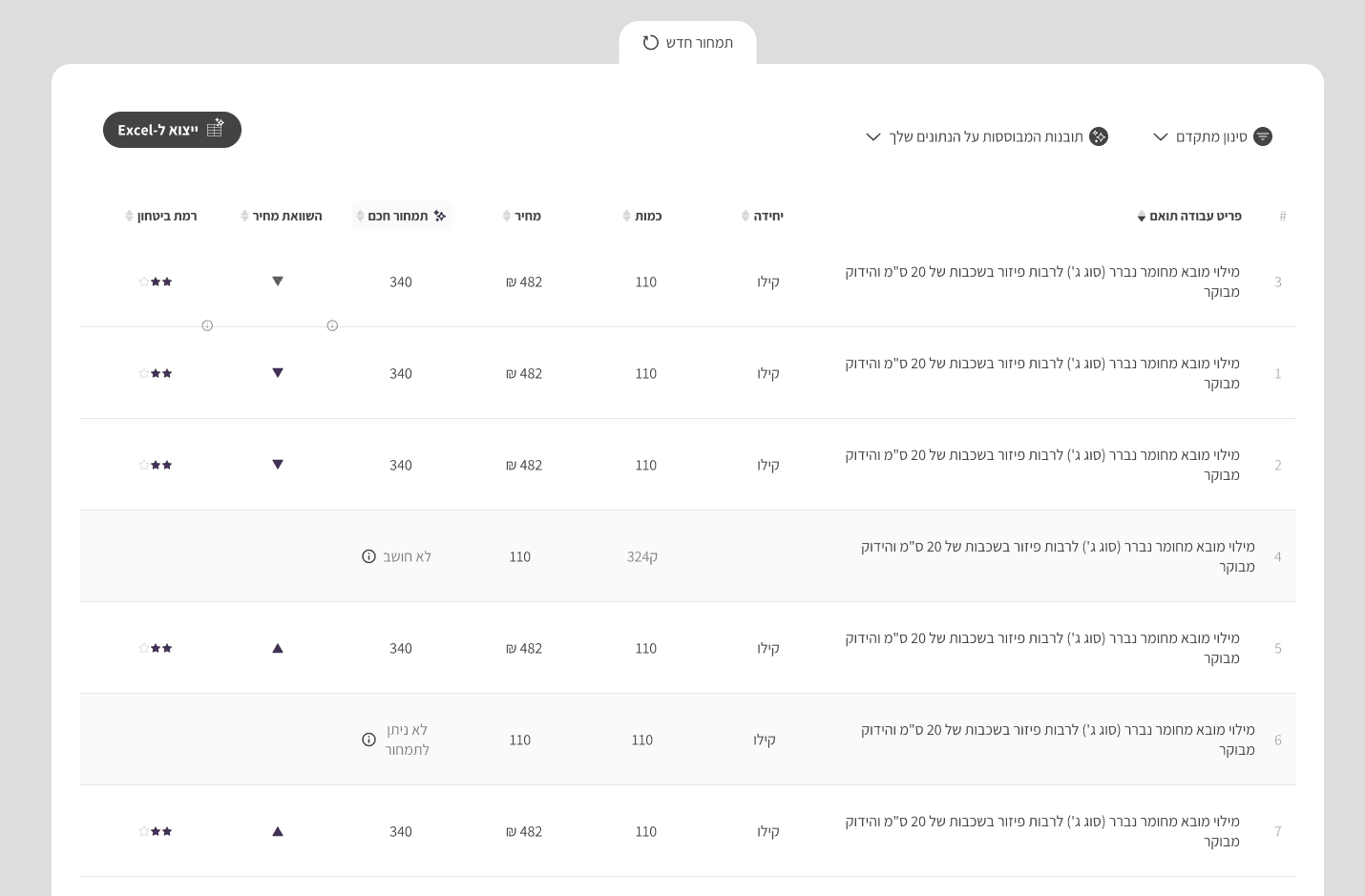
Since users rely on the system for financial decision making, it was essential to clearly communicate what the pricing was based on. The system therefore allows users to review the specific parameters and line items that contributed to the final estimate.
By exposing these components, pricing is presented as a reasoned outcome rather than a “black box” decision. This approach reduces uncertainty and strengthens confidence in both the system and the pricing result.
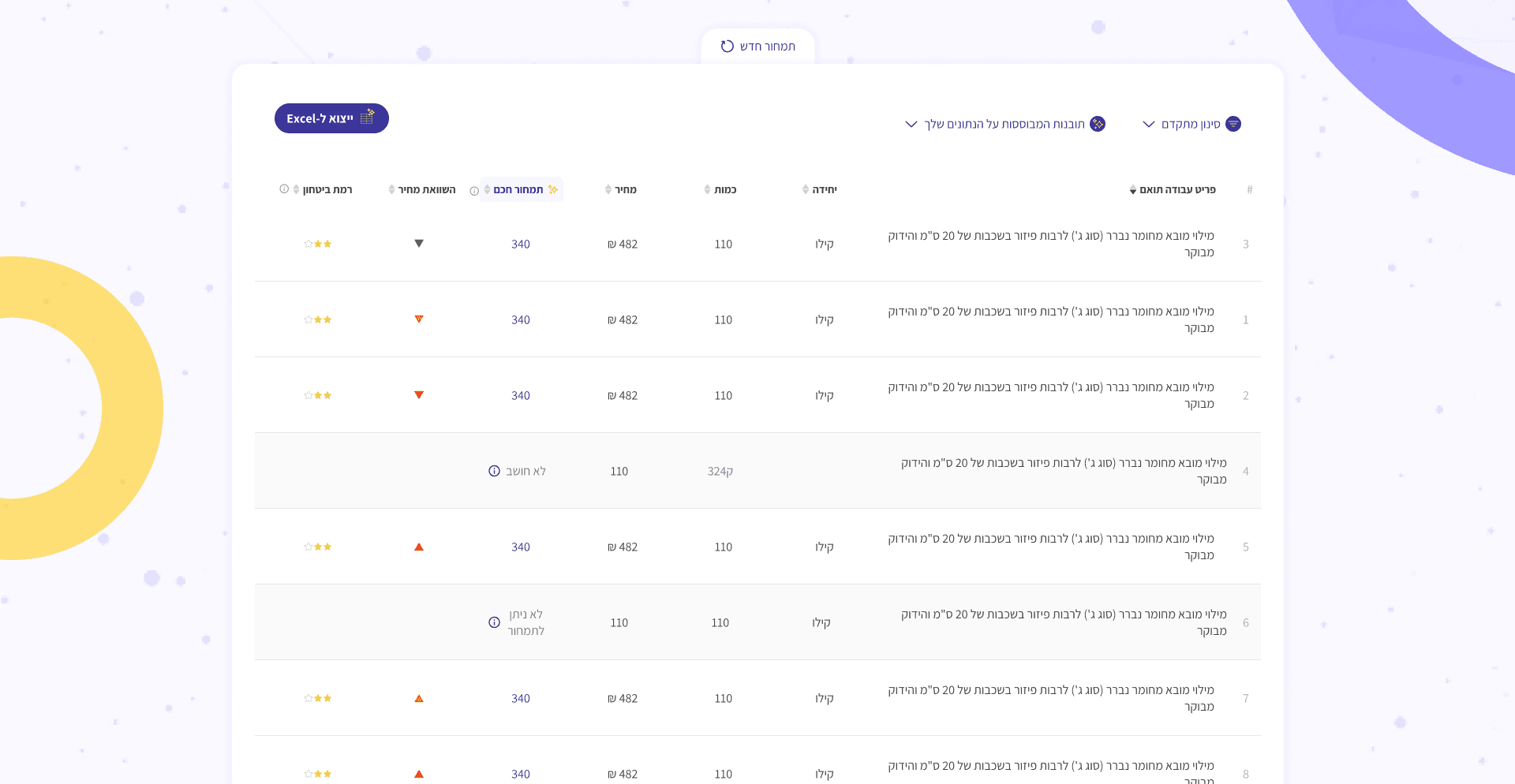
Each project estimate includes both a pricing breakdown and a confidence level of each estimate.
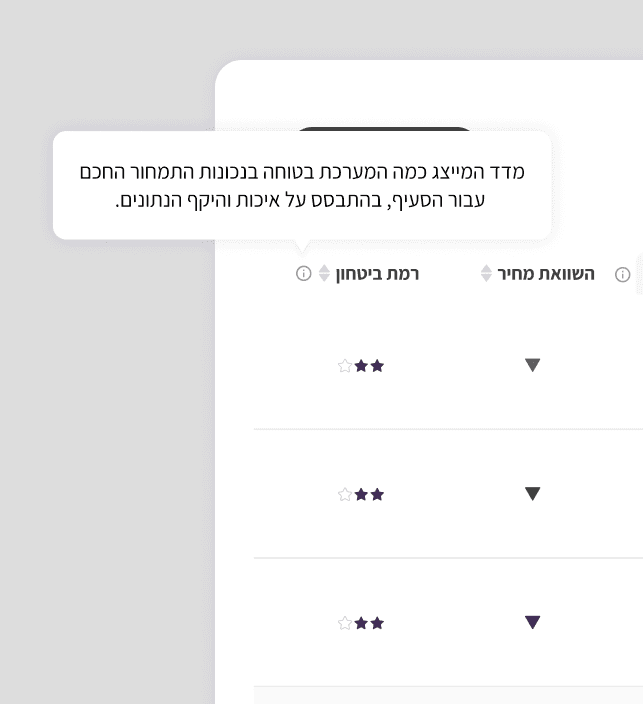
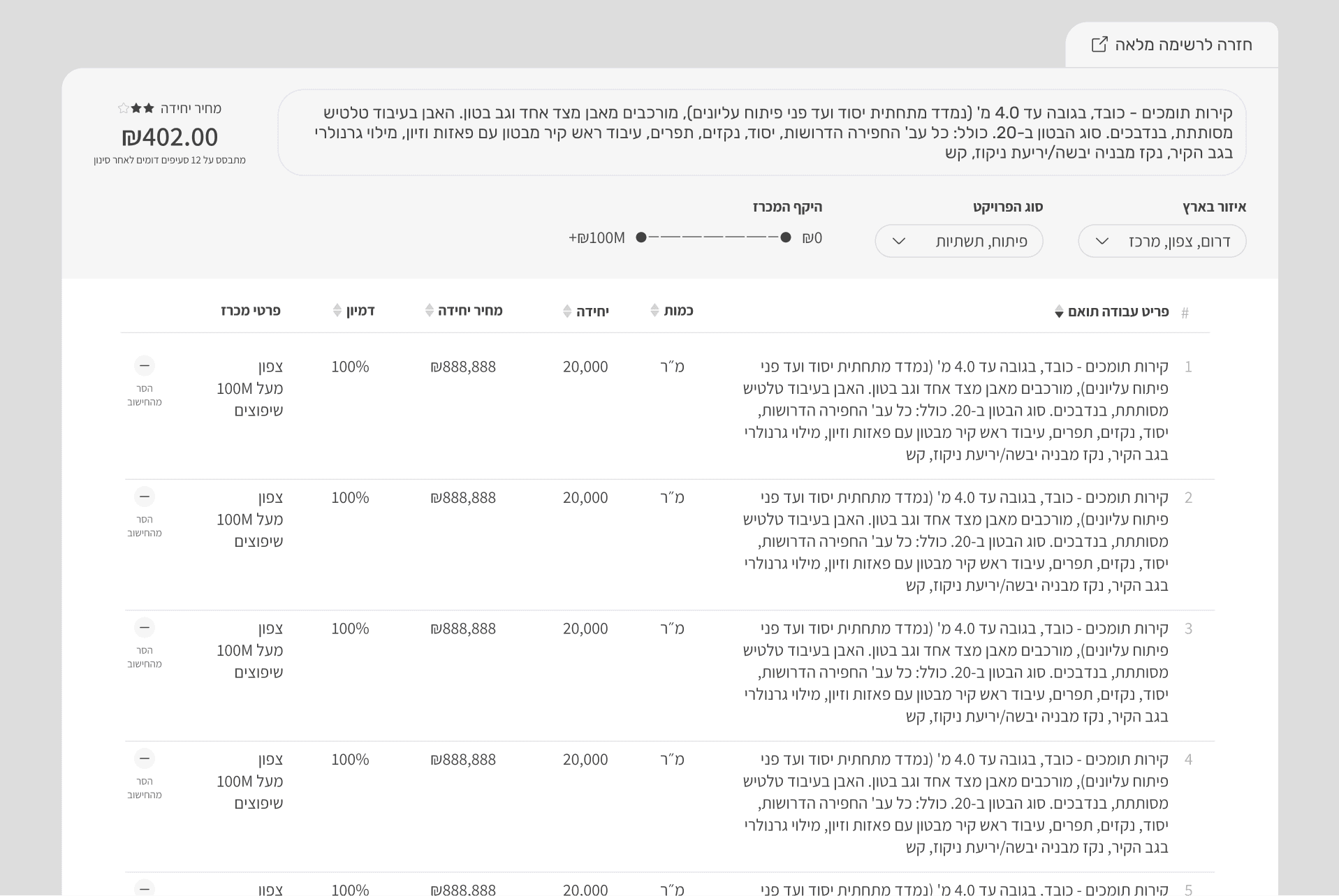
A transparent view of the components included in the final pricing estimate.
Users can control which items are included in the pricing calculation.
08.Business Considerations
Business Oriented UX: Lowering the Entry Barrier
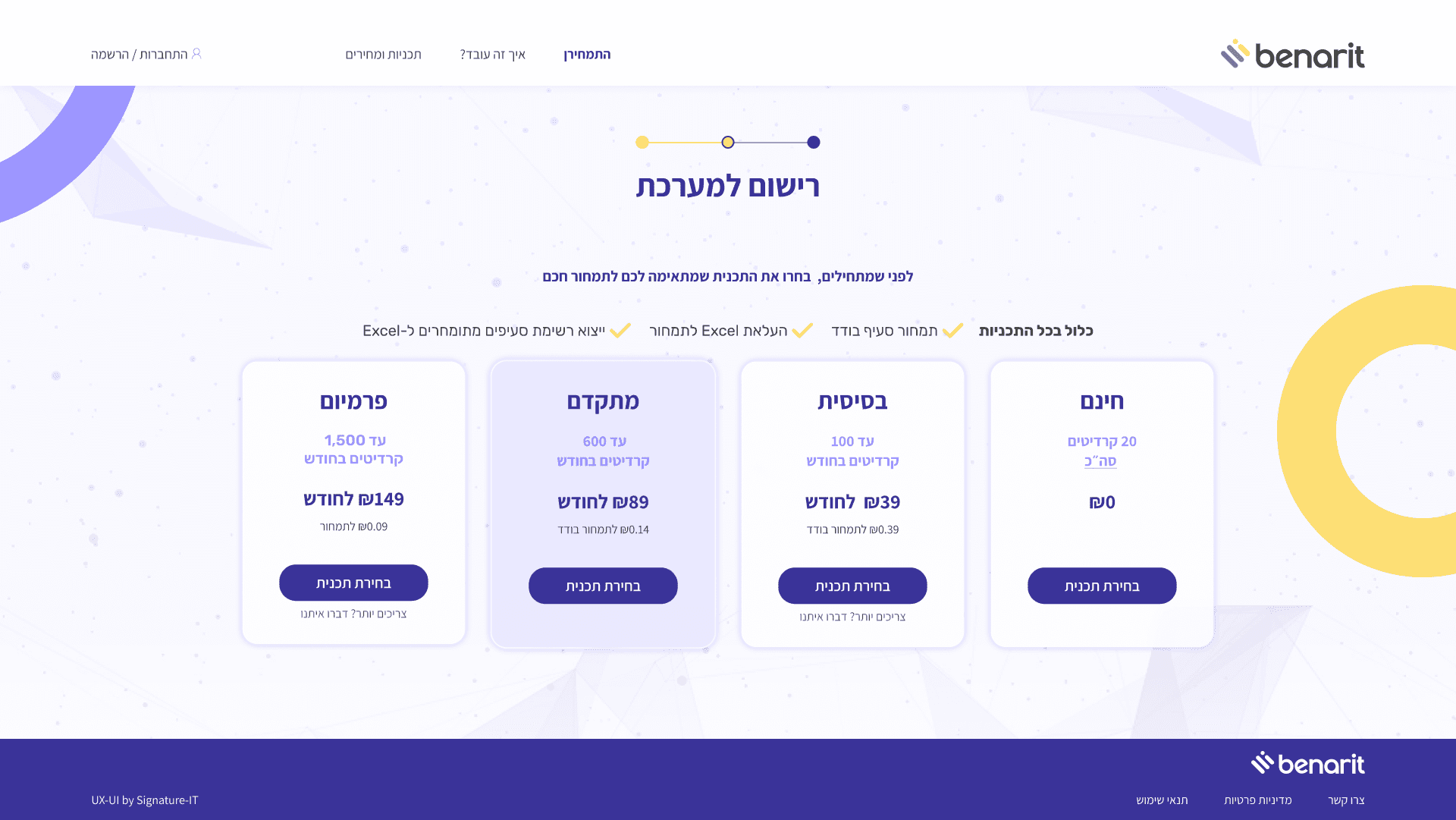
In addition to usability considerations, the user experience was designed with clear business goals in mind. To encourage adoption and reduce hesitation, users can register and explore the system before committing financially. The transition from free exploration to paid actions was carefully designed to feel predictable and transparent.
Clear boundaries between free and paid steps, combined with upfront visibility into what users are paying for, helped reduce friction and increase conversion without pressure.
This approach aligns user confidence with business objectives, ensuring that cost related interactions feel intentional rather than surprising.
09. the solution
The Final Experience
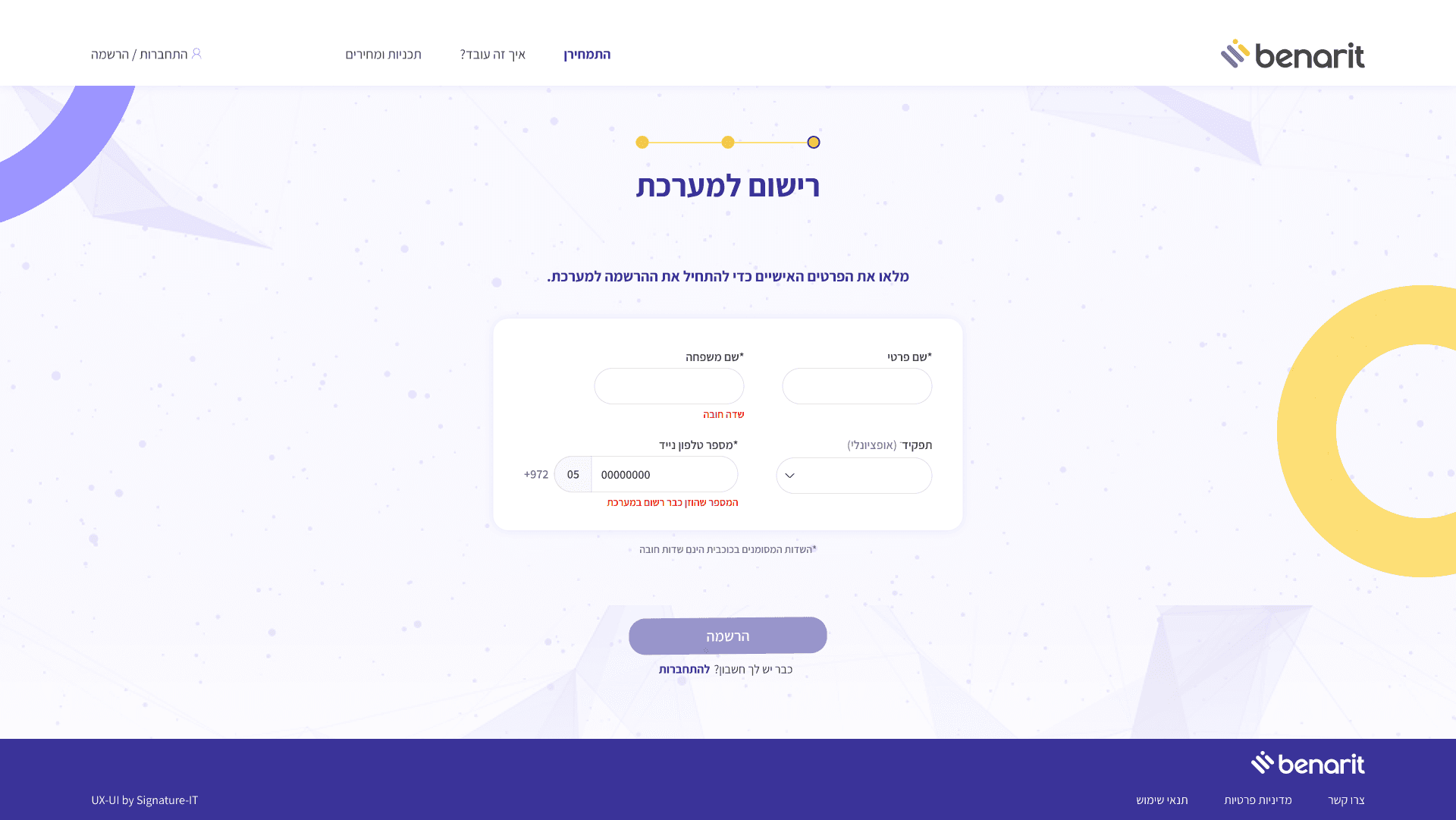
Getting started
Screens that guide users through registration and initial setup, allowing them to understand the system and begin the pricing process with minimal friction.
Connect to Content
Add layers or components to make infinite auto-playing slideshows.

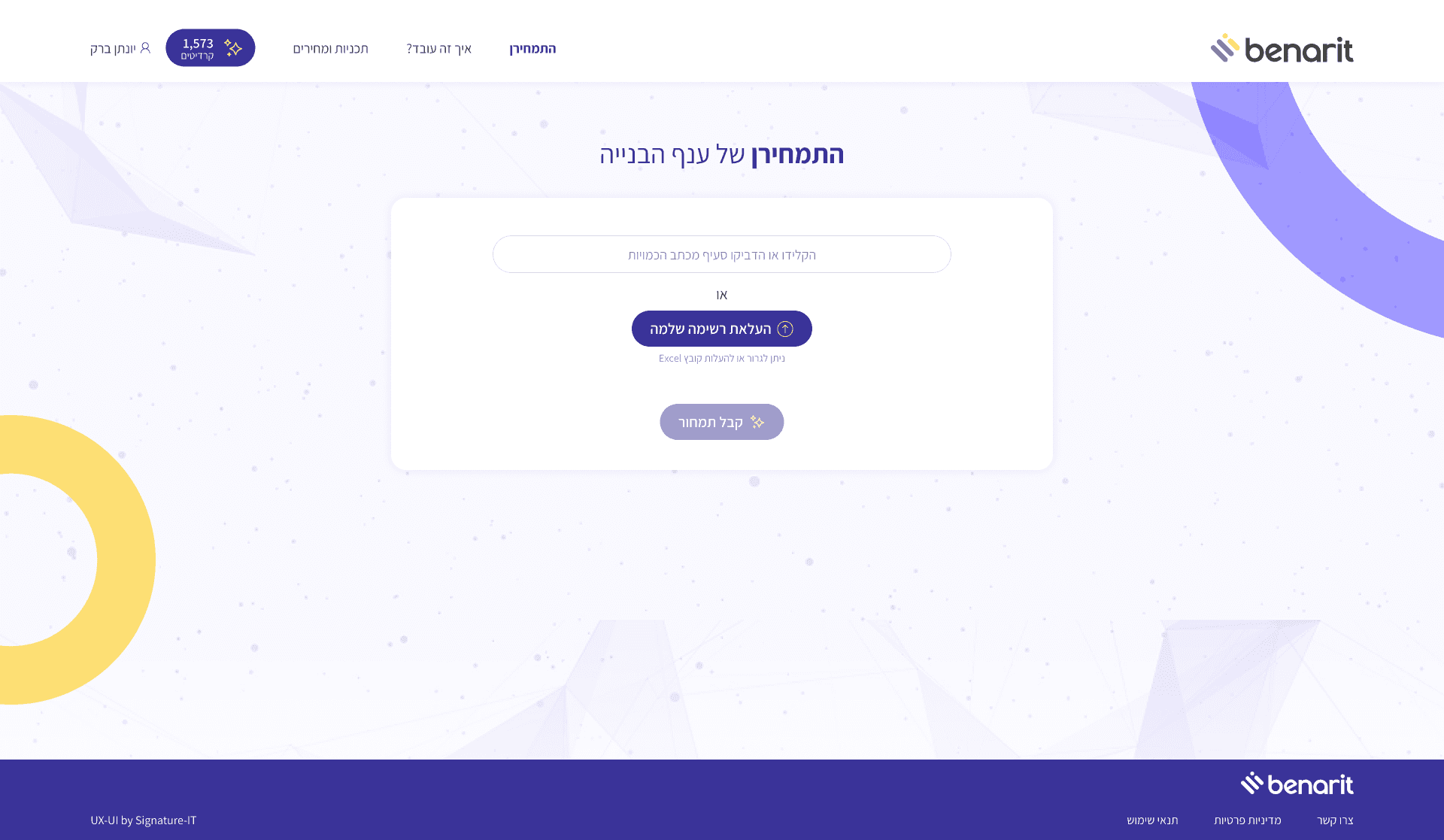
preparing for pricing
Screens that support data upload, system interpretation, and user validation before any pricing action is triggered.
" height="305.271612721163px" id="dpS8oUWH0" transform="translate(3.041 1.83)" width="14.914037416200193px"/></svg>)
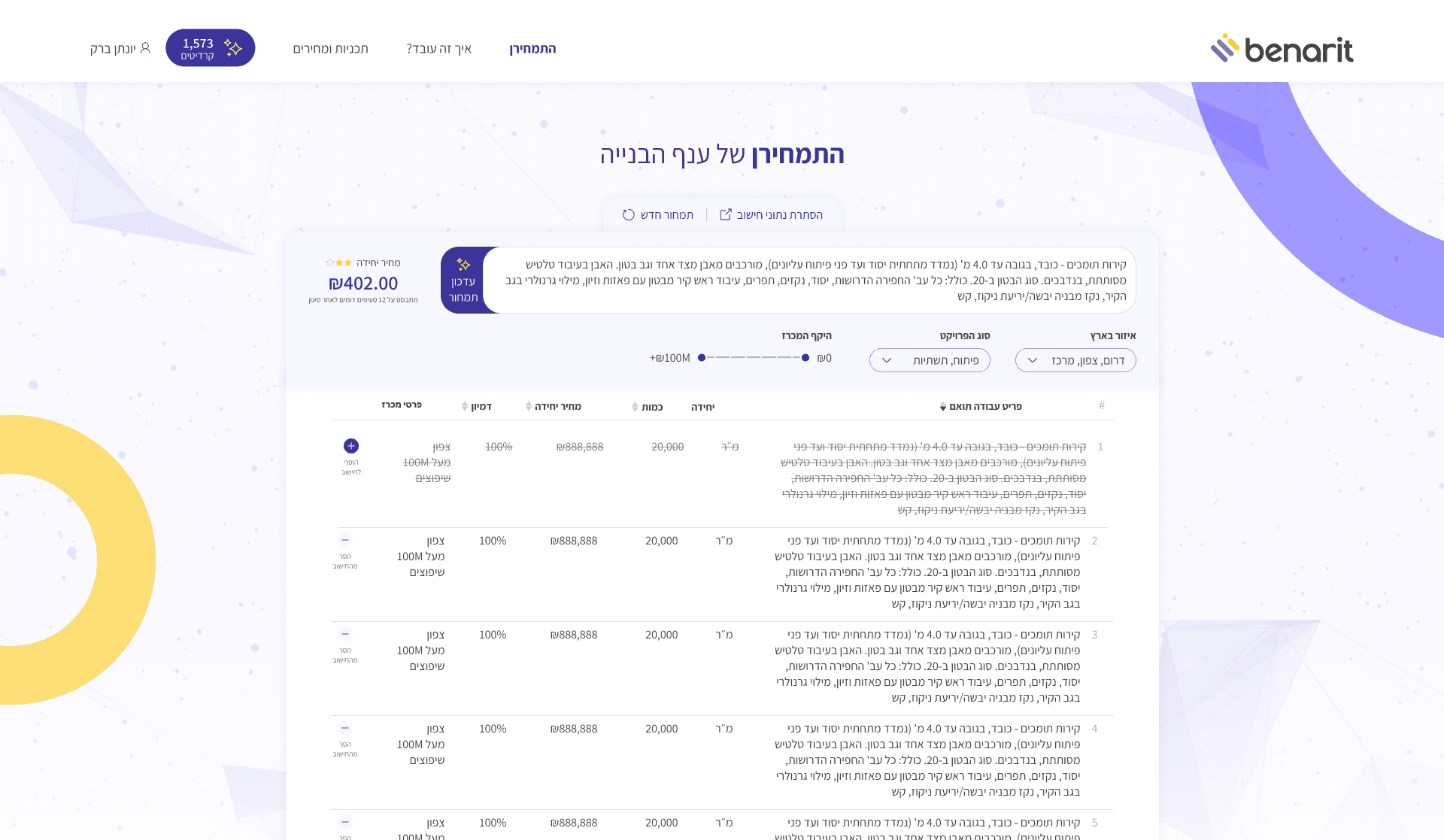
Pricing the project
Screens that present the pricing outcome, including breakdowns and confidence indicators, enabling informed evaluation and decision-making.
10.self reflection
What I Learned
This project reinforced the importance of designing for trust, especially when users rely on automated systems for financial decisions. I learned that good UX does not always mean hiding complexity, but rather exposing it in a way that feels understandable and controllable.
Working without formal user research sharpened my ability to extract insights from domain knowledge, real data, and iterative design decisions. The process also strengthened my collaboration skills and my ability to balance user needs, business constraints, and technical limitations in a real world product environment.
Let’s get in touch!
Curious, motivated, and ready to collaborate.
noavano22@gmail.com
© By Noa Vano 2025
Overview
Designing the Pricing Experience
This case study presents the UX design of an AI based project pricing system developed from scratch for the construction industry. The platform enables professionals to upload Excel based project data, review how the system interprets their information, and receive a detailed pricing estimate. The core UX challenge was designing a transparent, trustworthy experience around AI driven pricing, where data inconsistencies, financial impact, and user confidence all play a critical role. The solution focused on giving users visibility, control, and clarity at key decision points, especially before paid actions.
UX Case Study
Benarit - AI Based Pricing System
An AI-based pricing system that analyzes project data and generates transparent, reviewable cost estimates for construction professionals.
Role
UX Designer - Signature-IT
Timeline
October - December 2025
Product
B2B SaaS
Target audience
Construction professionals
Project
Client project - Benarit
01.problem statement
Pricing Under Uncertainty
Accurately pricing construction projects is a complex and high risk process. Project data is often inconsistent, incomplete, and structured differently from one project to another, requiring extensive manual work and professional judgment.
As a result, pricing is time consuming, difficult to validate, and prone to errors, while directly impacting critical financial decisions.
"A small miscalculation can mean a big loss."
04.Design Focus
Designing for Informed Commitment
Designing the pricing experience required careful consideration of where users need clarity, control, and reassurance throughout the flow. Given the financial implications of pricing decisions, certain moments in the experience carried more weight than others and demanded deliberate UX choices.
02.UX Approach
Insights from Domain Knowledge
Due to project constraints, user research was conducted through close collaboration with the client rather than formal user interviews.
Insights were gathered via:
Ongoing conversations with domain experts.
The client’s deep familiarity with real-world pricing workflows.
Analysis of actual project data used in day to day pricing.
This approach provided a realistic understanding of user needs, behaviors, and decision making contexts while aligning with project constraints.
03. System Flow
How the System Works
The system supports project pricing through a structured, multi step process. Users submit project data, which the system processes and interprets to generate pricing. Before any pricing action is finalized, users can review how their data was understood, validate key inputs, and make adjustments where necessary.
This flow reduces the risk of costly errors and supports informed decision making by balancing automation with user oversight.
06.Information Structure
Information Design & Refinement
Another major focus was preventing cognitive overload in a data-heavy environment.
Information was carefully structured to maintain clarity without sacrificing necessary detail. This included simplifying data views, prioritizing essential information, and avoiding unnecessary technical language.
Decisions around hierarchy, layout, and content density were made collaboratively, with a consistent focus on usability and user confidence, especially at moments where users evaluate data and pricing-related inputs.
Adjust how data is interpreted
05.Key UX Decision
Pre Commitment Review Step
A key UX decision was introducing an intermediate review step before users initiate the pricing action, a point in the flow that involves a direct financial commitment.
After uploading their project data, users can review how the system interpreted the information and make adjustments before proceeding. This step reduces the risk of errors, gives users control over the automated process, and builds trust by making system logic visible.
Placing transparency at the moment of commitment supports confident decision making and reinforces the system’s credibility.
07.Decision Support
Building Trust Through Pricing Transparency
Beyond validating the data itself, a key UX challenge was building trust in the pricing outcome.
Since users rely on the system for financial decision making, it was essential to clearly communicate what the pricing was based on. The system therefore allows users to review the specific parameters and line items that contributed to the final estimate.
By exposing these components, pricing is presented as a reasoned outcome rather than a “black box” decision. This approach reduces uncertainty and strengthens confidence in both the system and the pricing result.
Each project estimate includes both a pricing breakdown and a confidence level of each estimate.
A transparent view of the components included in the final pricing estimate.
Users can control which items are included in the pricing calculation.
08.Business Considerations
Business Oriented UX: Lowering the Entry Barrier
In addition to usability considerations, the user experience was designed with clear business goals in mind. To encourage adoption and reduce hesitation, users can register and explore the system before committing financially. The transition from free exploration to paid actions was carefully designed to feel predictable and transparent.
Clear boundaries between free and paid steps, combined with upfront visibility into what users are paying for, helped reduce friction and increase conversion without pressure.
This approach aligns user confidence with business objectives, ensuring that cost related interactions feel intentional rather than surprising.
10.self reflection
What I Learned
This project reinforced the importance of designing for trust, especially when users rely on automated systems for financial decisions. I learned that good UX does not always mean hiding complexity, but rather exposing it in a way that feels understandable and controllable.
Working without formal user research sharpened my ability to extract insights from domain knowledge, real data, and iterative design decisions. The process also strengthened my collaboration skills and my ability to balance user needs, business constraints, and technical limitations in a real-world product environment.
09. the solution
The Final Experience
Getting started
Screens that guide users through registration and initial setup, allowing them to understand the system and begin the pricing process with minimal friction.
preparing for pricing
Screens that support data upload, system interpretation, and user validation before any pricing action is triggered.
Pricing the project
Screens that present the pricing outcome, including breakdowns and confidence indicators, enabling informed evaluation and decision-making.
Let’s get in touch!
Curious, motivated, and ready to collaborate.
noavano22@gmail.com
© By Noa Vano 2025
UX Case Study
Benarit -
AI Based pricing system
An AI-based pricing system that analyzes project data and generates transparent, reviewable cost estimates for construction professionals.
Timeline
October - December 2025
Product
B2B SaaS
Project
Client project - Benarit
Target audience
Construction professionals
Role
UX Designer - Signature-IT
Overview
Designing the
Pricing Experience
This case study presents the UX design of an AI based project pricing system developed from scratch for the construction industry. The platform enables professionals to upload Excel based project data, review how the system interprets their information, and receive a detailed pricing estimate. The core UX challenge was designing a transparent, trustworthy experience around AI driven pricing, where data inconsistencies, financial impact, and user confidence all play a critical role. The solution focused on giving users visibility, control, and clarity at key decision points, especially before paid actions.
01.problem statement
Pricing Under Uncertainty
Accurately pricing construction projects is a complex and high risk process. Project data is often inconsistent, incomplete, and structured differently from one project to another, requiring extensive manual work and professional judgment.
As a result, pricing is time consuming, difficult to validate, and prone to errors, while directly impacting critical financial decisions.
"A small miscalculation
can mean a big loss."
02.UX Approach
Insights from
Domain Knowledge
Due to project constraints, user research was conducted through close collaboration with the client rather than formal user interviews.
Insights were gathered via:
Ongoing conversations with domain experts.
The client’s deep familiarity with real world pricing workflows.
Analysis of actual project data used in day to day pricing.
This approach provided a realistic understanding of user needs, behaviors, and decision making contexts while aligning with project constraints.
“Pricing decisions are shaped by experience as much as by data.”
03. System Flow
How the System Works
While many EdTech platforms today incorporate smart recommendations, in the academic space, most systems still rely on rigid course models and offer only surface level suggestions, missing deeper insight into students’ goals, habits, and long-term progress. As academic learners seek more tailored and flexible experiences, the need for systems that adapt continues to grow.
"Decisions carry weight
when money involved"
05.Key UX Decision
Pre Commitment
Review Step
While many EdTech platforms today incorporate smart recommendations, in the academic space, most systems still rely on rigid course models and offer only surface-level suggestions, missing deeper insight into students’ goals, habits, and long-term progress. As academic learners seek more tailored and flexible experiences, the need for systems that adapt continues to grow.
Adjust how data is interpreted
07.Decision Support
Building Trust Through
Pricing Transparency
While many EdTech platforms today incorporate smart recommendations, in the academic space, most systems still rely on rigid course models and offer only surface-level suggestions, missing deeper insight into students’ goals, habits, and long-term progress. As academic learners seek more tailored and flexible experiences, the need for systems that adapt continues to grow.
A transparent view of the components included in the final pricing estimate.
Each project estimate includes both a pricing breakdown and a confidence level of each estimate.
Users can control which items are included in the pricing calculation.
06.Information Structure
Information Design &
Refinement
Another major focus was preventing cognitive overload in a data-heavy environment.
Information was carefully structured to maintain clarity without sacrificing necessary detail. This included simplifying data views, prioritizing essential information, and avoiding unnecessary technical language.
Decisions around hierarchy, layout, and content density were made collaboratively, with a consistent focus on usability and user confidence, especially at moments where users evaluate data and pricing related inputs.
09. the solution
The Final Experience
Getting started
Screens that guide users through registration and initial setup, allowing them to understand the system and begin the pricing process with minimal friction.
preparing for pricing
Screens that support data upload, system interpretation, and user validation before any pricing action is triggered..
Pricing the project
Screens that present the pricing outcome, including breakdowns and confidence indicators, enabling informed evaluation and decision-making.
Let’s get in touch!
Curious, motivated,
and ready to collaborate.
noavano22@gmail.com
10.self reflection
What I Learned
This project reinforced the importance of designing for trust, especially when users rely on automated systems for financial decisions. I learned that good UX does not always mean hiding complexity, but rather exposing it in a way that feels understandable and controllable.
Working without formal user research sharpened my ability to extract insights from domain knowledge, real data, and iterative design decisions. The process also strengthened my collaboration skills and my ability to balance user needs, business constraints, and technical limitations in a real world product environment.
© By Noa Vano 2025